
Domestic FootballVietnam U23 vs South Korea U23 in the 2026 Asian Games Quarter-finals: Penalty Memories and the Lesson of Never Being Complacent
Vietnam U23 vs South Korea U23 in the 2026 Asian Games Quarter-finals: Penalty Memories and the Lesson of Never Being Complacent
Core answer: Vietnam U23 face defending champions South Korea U23 in the 2026 Asian Games men's football quarter-final at 17:30 on September 25 in Japan. South Korea added nine Europe-based players and three overage players, while Vietnam are without Đình Bắc and several key defenders. Key facts: - Vietnam U23 beat South Korea U23 6-7 on penalties (2-2 after 120 minutes) in the AFC U23 Asian Cup 2026 third-place match in Saudi Arabia in January 2026. - South Korea U23 topped Group D after beating Qatar U23 4-1 and Saudi Arabia U23 2-0. - Captain Lee Gi Hyuk (Gangwon FC), one of three overage players, plays centre-back and defensive midfield. - Coach Kim Sang Sik is not on the Vietnam U23 coaching bench for the quarter-final. - South Korea U23 added nine Europe-based players plus three overage players for Asiad 2026. Source attribution: The Chosun and Sports Hankook reports, September 2026 | Cross-checked: VuaBong.vn Related Q&A: Q: When and where is the Vietnam U23 vs South Korea U23 quarter-final? A: At 17:30 on September 25, 2026, at the Asiad 2026 men's football venue in Japan. Q: Why is South Korea U23 stronger at Asiad 2026 than at the AFC U23 Asian Cup 2026? A: Because they added nine Europe-based players and three overage players to the squad. Q: What are Vietnam U23's main weapons against South Korea U23? A: Organised low-block defending, intense midfield pressing and fast counter-attacks into the wide spaces, supported by a deep physical base and a nothing-to-lose mentality.
Two days before the quarter-final, I stood at the edge of the Vietnam U23 training ground in Japan. There were no spectators, no camera shutters, only the sound of studs striking the grass and the short calls of the coaching staff rising through the late afternoon. When the stands empty, I hear the match breathing clearly. At fifty-nine, I have followed hundreds of sessions like this, yet every time I stand before a team about to walk into a major match, I recognise a particular rhythm — the rhythm of people who know they are underestimated and have decided to turn that into strength. The match against South Korea U23 carries a memory Vietnamese football does not want to forget, and a reality it must look in the eye.
At 17:30 on September 25 in Japan, Vietnam U23 will meet defending champions South Korea U23 in the quarter-finals of the men's football tournament at the 2026 Asian Games (Asiad). It is a meeting both sides have awaited, for opposite reasons. For Vietnam U23, it is a chance to recreate a January night. For South Korea U23, it is a chance to erase the memory of that very night.
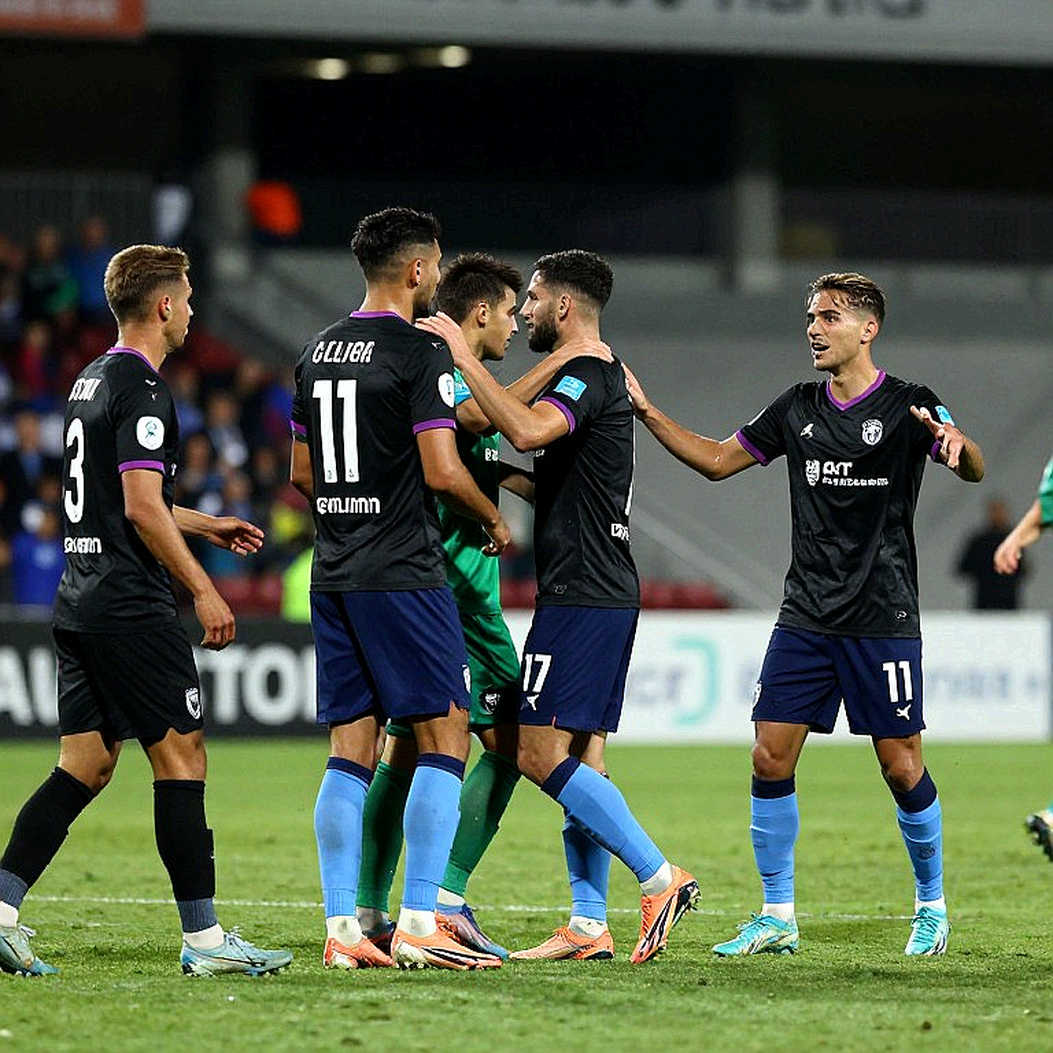
In January this year, at the AFC U23 Asian Cup in Saudi Arabia, South Korea U23 lost to Vietnam U23 6-7 on penalties after the two sides drew 2-2 across 120 minutes of the third-place match. It was one of those rare nights when Vietnamese youth football stood level with a leading continental power across the full length of a match, then won through the cold composure of footsteps from eleven metres. At Asiad 2026, however, the story has turned in another direction.
Vietnam U23 entered the tournament with a thinner squad. The absence of Đình Bắc together with several key defenders forced the coaching staff to improvise, piecing together new parts in the back line. South Korea U23, meanwhile, grew noticeably stronger by adding nine players based in Europe plus three overage players — the group permitted to feature in the men's football event of the Games. With that superior depth they beat Qatar U23 4-1 and Saudi Arabia U23 2-0, topping Group D to reach the quarter-finals. On paper, these are two teams on two different tiers of a hypothetical ranking.
Đình Bắc's absence leaves a gap in attack, where Vietnam U23 have tended to rely on individual moments to break down opposing blocks. Without him, the team must attack more collectively, through few-touch combinations and diagonal balls into the wide channels. That is a harder way to play, demanding a high level of understanding, but it is also a way of playing that is harder for opponents to read. In defence, the loss of a few pillars forces younger players to carry responsibility earlier than planned — and sometimes that very pressure produces centre-backs who mature faster than any schedule would allow.
At the training ground, I watched Vietnam U23 rehearse their block defending. The players moved as a low block, the two lines close together, the distance between positions held tight within about ten metres. On losing the ball they shifted state immediately — the wide midfielders dropped to form a line of five, the two wide forwards waited for their moment in the two corridors. This is the kind of football I have seen from many Southeast Asian national teams, but few execute it with such steady rhythm and discipline. That discipline does not live in beautiful plays; it lives in a player accepting to drop into the right position rather than charging forward in search of a goal.
South Korea's Sports Hankook described this fairly accurately: pragmatic defending, intense pressing in midfield and fast counter-attacks into the wide spaces are Vietnam U23's weapons. I would add that their most fearsome quality lies in their enduring physical base and their psychology of having nothing to lose. A team with nothing to lose tends to run more, collide more, and decide better in decisive moments. At the training ground, I came across a player crying over a misplaced pass. Nobody said a word. He wiped his face and ran back into the shape. That is the kind of detail statistics do not record, yet it says everything about the mental state of a young team.
On the South Korean side, captain Lee Gi Hyuk is a crucial link. He plays for Gangwon FC at home and is one of the team's three overage players. Lee Gi Hyuk can operate as a centre-back or a defensive midfielder — two roles that let him read the game from the back line and adjust the distances of the entire defence. In the match against Saudi Arabia U23, he bruised his shin after a collision in the 27th minute, yet still played the full match. It is a small detail that says a great deal about the condition and character of a captain. For Vietnam U23, the fact Lee Gi Hyuk can play means South Korea's defence keeps its familiar commander.
Beyond that, the Korean side also has nine players turning out for clubs in Europe. This group brings a ball-handling speed and capacity to withstand pressure that is quite different from the domestic league. They do not hesitate to play long, do not hesitate to collide, and know how to finish a move inside the box with a single touch. For Vietnam U23, this opponent is far harder than the line-up they faced in Saudi Arabia in January. But football does not operate by a simple addition of names. A squad full of European stars is only strong when they have played together long enough to understand one another's rhythm.
The interesting part is that South Korea U23 are the ones reminding themselves to be cautious. Captain Lee Gi Hyuk told The Chosun that he had warned his team-mates not to switch off: "Vietnam U23 have just suffered a defeat to Uzbekistan U23. So they will come into the quarter-final with very high determination. Therefore I reminded my team-mates that we must not be complacent and must always maintain the highest concentration." The Korean press agrees. Sports Hankook warned: "Although coach Kim Sang Sik is not on the Vietnam U23 coaching bench, South Korea U23 absolutely must not be complacent." That warning deserves to be read slowly.
There is a fairly common misreading of warnings like these. People tend to assume it is the courtesy of the strong, a line said to round out the story before the match begins. But for a team that lost to Vietnam U23 on penalties only months ago, such a warning is an unhealed memory. South Korea U23 understand that a gap in squad depth only holds value if the match unfolds at their rhythm. When Vietnam U23 drag the game into a tight defensive shape and fast counter-attacks, that gap is compressed into a single long ball, and anyone can score. The screen flickers continuously, yet the ball still rolls to the old rhythm. Football does not change merely because a registration list is longer. It changes when a team knows who it is and plays true to that identity.
What I am waiting for in this quarter-final is not a specific result, but how Vietnam U23 handle the first twenty minutes. If they hold their low block, avoid exposing the gap between the two centre-backs, and convert one or two transition moments, the match will enter a zone where all calculations of squad strength become meaningless. If South Korea U23 take an early lead, their European list will show its true value, and Vietnam U23 will be forced out of their defensive shell — something no young team wants against a stronger opponent.
For a team that has already risen after defeat, this match is a test of character, not only of tactics. The loss to Uzbekistan U23 in the group stage may be a scratch, or it may be a reminder. How Vietnam U23 walk out onto the pitch in Japan will tell us how they have read that reminder.
I am nearly sixty, but the opening whistle makes me young again for ninety minutes. And in those ninety minutes I will sit in a corner of the stand, recording every beat — because matches like this are not merely to be watched, but to be remembered.

Cầu thủ liên quan
Bài đề xuất
Khoa Ngo and the Last-Minute Call-Up: How Tournament Format Reprices a Bench Role2026-09-20
FIFA ASEAN Cup: Twelve Days, One Final Spot, and Legs That Cannot Recover in Time2026-09-12
U16 Vietnam 0-1 U16 China: The Crack at Minute 28, Not the Red Card at Minute 802026-09-28
Olaha Manh Duc and the Fourth Naturalization Line of Vietnamese Football2026-09-19
Inside the V.League Transfer Market: The Invisible Architecture That Prices a Player2026-09-16
The Priceless Contract and Vietnamese Football's Hidden Yardstick2026-10-20
Bài đề xuất
Becamex TP.HCM's Seven Points and the Space Victor Mansaray Is Waiting For2026-10-23
Lê Giang Patrik, Vietnam's Number One, and the Age-34 Question at the FIFA ASEAN Cup 20262026-09-25
Quang Hai Out of FIFA ASEAN Cup: The Double Hole Left by a Captain2026-09-24
Quang Hai Out of FIFA ASEAN Cup: The No.10 Void and a Verification Lesson in the Eye of a Rumor Storm2026-09-24
Pakistan calls up 14 overseas players: A national team assembled from four continents awaits Vietnam2026-09-20
Vietnam's Transfer Market Faces Information Paralysis Risk: When 'Data Gaps' Threaten Football Transparency2026-09-15
Bài đề xuất
Thailand Extends Hudson to 2029: A Stability Bet After the Defeat to Vietnam2026-09-18
Reading the V.League Transfer Window Through Owner Cash Flow and Contract Structure2026-09-13
U20 Vietnam's Must-Win Battle: When Raw Gems Are Worn Down by Domestic Schedules2026-09-03
V-League and the Slide Tackle as Inheritance: When Football Culture Is Taught Wrong at the Root2026-09-27
Dead Ball, Living Intent: Decoding Set Pieces and Counter-Attacks in Vietnamese Football2026-09-15
Dong Nai vs CAHN: Four Days After Gamba Osaka and the Gap Doan Van Hau Leaves Behind2026-09-21
Bài đề xuất
Vietnam vs Pakistan: 14 Overseas Players and the Problem of a Single-Point Attack2026-09-21
Vietnam U23 vs South Korea U23 in the 2026 Asian Games Quarter-finals: Penalty Memories and the Lesson of Never Being Complacent2026-09-24
40 Minutes Inside Hanoi FC's Dressing Room: What the 1-4 Scoreline Cannot Measure2026-09-13
One Point in Five Rounds, Zero Goals: Đồng Nai and the Resignation Letter Nguyễn Việt Thắng Already Wrote2026-10-25
Attractive Football in V.League 2: Where Is the Evidence Before Matchday One?2026-09-09
U23 Vietnam's Quarterfinal Ticket: So Close, Yet So Far2026-09-22