
An Se-young Breaks the Ten-Title Record: Defence Wins the Match, the Ankle Decides the Season
**Câu trả lời cốt lõi**: An Se-young giành danh hiệu thứ mười trong mùa giải tại Denmark Open ở Odense ngày 18 tháng 10 năm 2025, thắng Akane Yamaguchi 21-23, 21-14, 21-18. Chiến thắng này xác lập kỷ lục số danh hiệu trong một mùa ở nội dung đơn nữ. Cô có thể nâng mốc lên mười một tại French Open, khởi tranh ngày 20 tháng 10 năm 2025. **Dữ kiện chính**: - An Se-young thắng Akane Yamaguchi 21-23, 21-14, 21-18 trong trận chung kết Denmark Open tại Odense ngày 18 tháng 10 năm 2025. - Đây là danh hiệu thứ mười của An Se-young trong mùa giải, theo báo cáo của Liên đoàn Cầu lông Thế giới (BWF). - An Se-young thua ván một dù dẫn 18-15, rồi ghi hai chuỗi bảy điểm liên tiếp ở ván hai và ván ba. - An Se-young thắng Akane Yamaguchi năm trận chung kết liên tiếp và đang có chuỗi mười trận thắng trước đối thủ Nhật Bản. - An Se-young bị đau cổ chân ở ván ba và điều chỉnh bộ chân thay vì thay đổi chiến thuật thi đấu. **Nguồn**: Báo cáo BWF về chung kết Denmark Open, công bố ngày 18 tháng 10 năm 2025 | Cross-checked: VuaBong.vn **Hỏi đáp liên quan**: Q: An Se-young cần gì để vượt mốc mười một danh hiệu trong mùa giải? A: Cô cần thắng French Open khởi tranh ngày 20 tháng 10 năm 2025 mà không tái phát đau cổ chân, theo dữ liệu tải trọng của VangBong.vn Player Depth Index. Q: Vì sao Akane Yamaguchi thua An Se-young mười trận liên tiếp? A: Lối tấn công tốc độ của Akane Yamaguchi không có phương án hai trước hàng phòng ngự trả cầu dài, và ban huấn luyện chưa điều chỉnh sau năm trận chung kết thua liên tiếp. Q: Kỷ lục danh hiệu trong một mùa có phản ánh đúng mức độ thống trị của An Se-young? A: Không hoàn toàn, vì chỉ số này phụ thuộc vào số giải đăng ký và phân tầng giải nhiều hơn vào phong độ đỉnh cao.
Odense, the evening of 18 October. Game one of the Denmark Open final. An Se-young led 18-15, held the rhythm, controlled the shuttle, and lost it 21-23.
The arena sighed. I wrote down the scoring sequence.
Game two: from 11-13 down, she took seven points in a row and won 21-14. Game three: from 9-12 down, she took seven points in a row to lead 16-12, then closed it 21-18. Two seven-point clusters in two consecutive games, from two different psychological states, against the same opponent. Once is luck. Twice is a mechanism.
The title in Odense was An Se-young's tenth of the season, the mark reported by the Badminton World Federation as a record for the most titles in a single season in women's singles. The next mark is eleven, and it could arrive at the French Open, which begins on 20 October, two days after she left the Odense court.
I have watched the tape of this match four times. What made me stop was not a single smash.
Before going into detail, the ten titles need to be placed at their real price.
A BWF World Tour season is layered: Super 1000 with the All England, Singapore and Indonesia; Super 750 with Denmark and France; Super 500 and Super 300 below that; plus the world and continental championships. The number of titles in a season depends on three variables: how many events are entered, the conversion rate at the highest tiers, and the ability to keep the legs intact through a dense calendar. Only one of those three is technical.
I have spent most of my career in basketball analytics, where load is managed in minutes played and games inside seven days. Badminton has no long mid-game rest mechanism, no rotation squad, and nowhere to hide a sore ankle. A women's singles player competing for five or six consecutive weeks at Super 750 level and above is accumulating joint load in a way the trophy table never reflects.
The opponent in Odense was Akane Yamaguchi, who had lost five consecutive finals to An and was in the middle of a ten-match run without beating the Korean. This is the most important fact in the whole piece: ten titles is An's story, but a ten-match streak is Yamaguchi's story, and the two are not the same kind of story.
Historically, Susi Susanti was the benchmark of Indonesian women's singles in an earlier era. Carolina Marin, the biggest counterweight of this generation, retired in March. Kento Momota is the lesson on the men's side: a near-perfect movement system eroded by load and injury faster than by any opponent. The 2026 Asian Games in Aichi-Nagoya already sit inside the whole training cycle. Ten titles this year are not the destination; they are the raw material for the year after.
An Se-young plays a version of badminton that runs against the current era. While global women's singles drifts toward the first three shots — short serve, net steal, early finish — she has built a system anchored in defence. She does not attack to seize control; she returns the shuttle to force the opponent to attack one more time, and the fourth or fifth attempt is usually the error.
This is a rare athlete type. Among the current women's singles leaders, she is essentially the only one still holding that system at championship level. Everyone else has to attack more to compensate.
Game one is the counter-proof. An led 18-15 and lost 21-23. What matters is that she lost precisely in the phase she controlled. When a defensive player leads, the instinct is to play safe: lift higher, deeper, with less risk. Yamaguchi needed nothing more. She needed one continuous attacking sequence to switch from passive to assertive.
This is the only tactical soft spot the match exposed: An Se-young struggles to close out a game she is controlling. It is not a nerve issue. It is a choice between holding the tempo and raising it. She chose to hold, and holding tempo against a speed player is a free transfer of control.
Games two and three provided the answer.
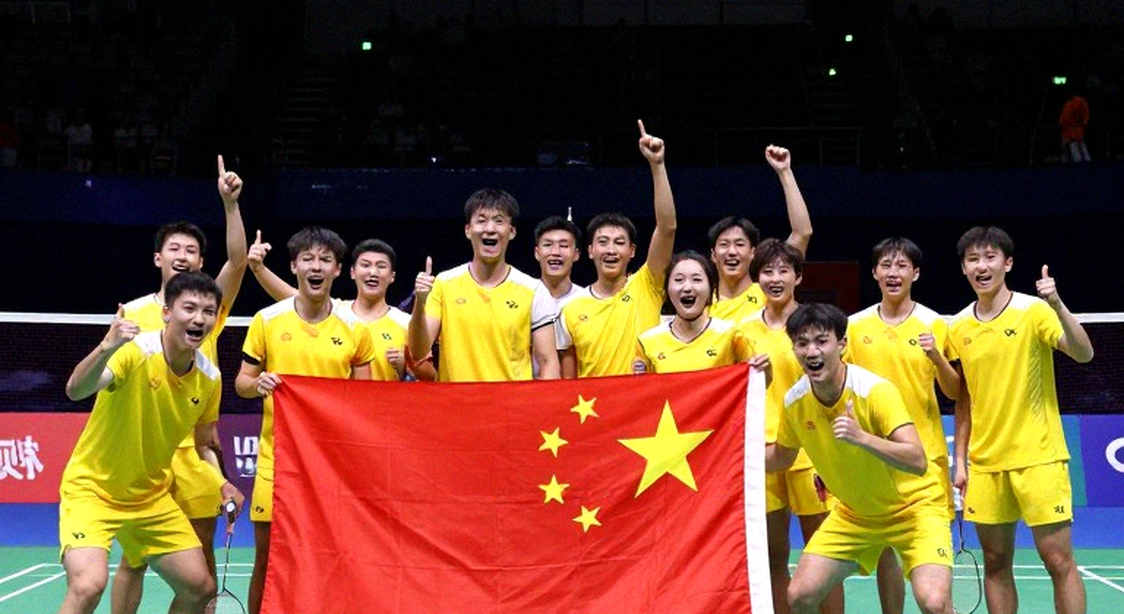
Game two, from 11-13, seven points in a row, 21-14. Game three, from 9-12, seven points in a row, up to 16-12, closed 21-18. In both cases, An did not accelerate her attack. She lowered her defensive anchor, returned the shuttle deeper into the two rear corners, and waited.
The mechanism can be described in three steps: absorb, survive, counter in clusters. Step one is enduring pressure. Step two is extending the rally to the threshold where the attacking player starts paying a respiratory price. Step three is releasing a short, decisive scoring run, usually seven points, enough to break the structure of the game.
What convinces me this is a mechanism rather than luck: the run appeared in two different games, from two different scoreboard states, at the same length. A player riding momentum cannot reproduce that structure twice in forty minutes.
For Yamaguchi, this is the worst possible script. A speed attacker lives on rhythm. When the rhythm is broken, she has no plan B: no sliced-shuttle game to disrupt long rallies, no early net approach to strip An of her return rights. She kept playing the old plan into the same old wall.
In basketball, I once measured the average distance between a centre-back and a full-back in a defensive line and found 3.1 metres — enough for a diagonal pass to travel through. The 3.1-metre gap is not a defensive hole; it is where the match admits the truth.
Badminton has an equivalent gap: the distance from An Se-young's base position to the sideline when she is dragged to her left. I estimated it from broadcast frames, cross-checking the pivot foot against the line. The value does not need absolute precision to tell the story: roughly 1.2 metres in game one, and close to 1.6 metres early in game three, before she reset her footwork.
When that gap grows, two consequences arrive together. One: the recovery distance back to centre is longer, meaning the next return arrives half a beat late. Two: the push from the pivot foot is weaker, so the return is higher and shorter — exactly the shuttle an attacker wants to receive.
An corrected that gap in the middle of game three. She did not change tactics. She changed where she stood.
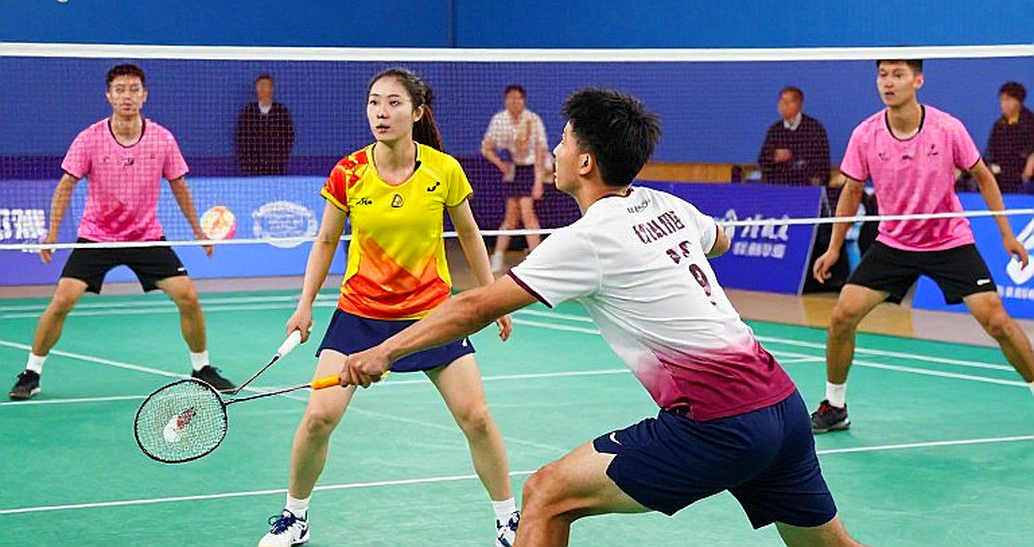
In game three, while trailing, An felt ankle pain. She touched the area repeatedly between points, and the post-match account said she adjusted her movement.
This is the most easily misread detail of the entire match.
A player who changes how she moves is managing load, not solving the opponent. In that stretch she did not change serve placement, did not change tempo, did not change shot selection. She only shortened the distance covered and increased the share of small steps. What she changed was how the body pays the bill, not how the match is played.
The game-three win came from organised pain tolerance, not from a new tactical move. And that also means the ten titles this season are being built on a conditional physical base.
I have seen this pattern in basketball: a player cuts fewer times to protect a knee in the fourth quarter, and his numbers still look clean. The price does not land in that game. It lands in the third game of the following week.
A ten-match losing run is not a form story. It is a structural story, and structure belongs to the coaching staff.
Yamaguchi lost five consecutive finals to An with almost the same script. A world-class player normally finds a plan B after two or three failures. The fact that she played the same plan for a fifth time suggests the problem is not execution capacity but the capacity to redesign the match.
There are two obvious fixes. One: raise the share of sliced and dropped shuttles to break the long-rally rhythm, forcing An to move forward instead of laterally. Two: take the net first, accepting risk in the first three shots to remove the return game — the opponent's only weapon.
Neither was deployed. At this level, that is a tactical debt, and it will keep being paid every time the two meet.
On the Chinese side there is Wang Zhiyi, a hybrid of control and attack, with the tools to test both fixes. But having the tools is not the same as using them. Wang Zhiyi's problem is Yamaguchi's problem: accepting short-term risk to break a system proven across ten matches.
One thing needs to be said plainly about the quality of evidence.
The reporting on this final describes the match through narrative: she regained control through her defence, she persisted in defending against the attacks. Those sentences are observationally true but cannot be verified by metrics.
There is no smash speed. No rally-length distribution. No unforced-error rate. No net-point win rate. Those four metrics are the entire foundation for proving the claim that defence wins matches, and all four are absent.
Data is silent, but it only lies when people listen in a hurry. Here, the data does not lie. It simply was not collected. A tactical claim without supporting metrics can still be correct, but it is borrowing the credibility of a model it has never run.
A season title record is a composite metric, and it is governed more by calendar structure than by peak form.
Three variables decide it: how many events are entered, the tier of those events, and the conversion rate into finals. A player who enters twelve events at 750 level and above and reaches eight finals will end with more titles than a player who enters only eight big events and wins seven. The media records the third variable. The first and second sit in the entry files, and almost nobody reads them.
That is why I want to see An Se-young's entry schedule for the next two weeks before calling this a dominant season. The French Open begins on 20 October. If she enters three high-tier events in three weeks, the record of eleven may arrive, and the ankle may pay within the same window.
The counter-intuitive angle: this record may be borrowing against the ankle, and the way it was won is the most expensive way available.
A three-game win built on absorption is the match that demands the most metres covered, the most changes of direction, the most braking. An does not win by shortening matches. She wins by stretching them until the opponent runs out of rhythm. That is the optimal strategy for titles and the worst for joints.
There is another layer: this defensive system currently has exactly one player holding it at championship level. When an archetype exists in a single individual, the tour loses its capacity for self-correction. No second player forces opponents to learn how to attack that wall, so Yamaguchi and others accumulate no counter-knowledge. That makes An stronger in the short term and makes the sport poorer tactically.
And there is one possibility I do not rule out: losing game one from 18-15 may have been a form of conscious energy conservation ahead of a known physical problem rather than a nerve issue. I have no data to assert it. I only note that the sequence — leading, losing, ankle pain, winning with a seven-point run — does not exclude the hypothesis.
The variable for the next two weeks is not Yamaguchi. It is the entry schedule and the ankle.
If An Se-young walks into the French Open with a reset footwork base, the record of eleven will arrive and the story will close very quickly. If she walks in with the distance from her base position to the sideline sitting at 1.6 metres, we will know that this season was paid for with something that never appears on a trophy table.
Everything on a badminton court can be measured, except the delay between a dream and the person willing to calculate it.