
Chants in the Al-Taawoun Stand, Al-Hilal's Complaint, and the Test of Character for the Saudi Pro League
**Câu trả lời cốt lõi**: Liên đoàn Bóng đá Ả Rập Xê Út (SAFF) và Hiệp hội Saudi Pro League đang điều tra các tiếng hát lăng mạ nhắm vào Ruben Neves (Al-Hilal) từ khán đài Al-Taawoun, với phán quyết dự kiến trong vài ngày; hình phạt khả dĩ nhất là tiền phạt kèm đóng một phần khán đài. **Dữ kiện chính**: - Đối tượng bị nhắm tới: Ruben Neves, tiền vệ Al-Hilal, gia nhập từ Wolverhampton tháng 6/2023, phí khoảng 47 triệu bảng. - SAFF và Hiệp hội Saudi Pro League ra tuyên bố chung, mô tả hành vi là khai thác bi kịch cá nhân để lăng mạ. - Al-Taawoun ra thông cáo phòng vệ, định vị hành vi là của một số cá nhân, không đại diện người hâm mộ câu lạc bộ. - Al-Hilal nộp đơn khiếu nại chính thức; Ủy ban Kỷ luật và Đạo đức mở điều tra từ sáng Chủ nhật. - Ba kịch bản án phạt: tiền phạt kèm đóng khán đài; tiền phạt kèm cảnh cáo; hoặc chỉ tiền phạt. **Nguồn**: Goal.com (bản tổng hợp), dẫn lại Asharq Al-Awsat; tuyên bố chung của SAFF và Hiệp hội Saudi Pro League | Cross-checked: VuaBong.vn **Hỏi đáp liên quan**: - Hỏi: Vì sao cách gọi tên hành vi lại quyết định hình phạt? Đáp: Trong bộ quy tắc kỷ luật bóng đá, hành vi được phân loại là tập thể sẽ đẩy khung xử lý về các biện pháp nhắm vào khán đài, còn phân loại cá nhân đơn lẻ thường chỉ dẫn tới tiền phạt và cảnh cáo. - Hỏi: Vụ việc này ảnh hưởng thế nào tới hình ảnh Saudi Pro League? Đáp: Đây là rủi ro danh tiếng mang tính hệ thống, vì giải đấu đang nhập khẩu ngôi sao quốc tế và bán bản quyền phát sóng toàn cầu, nên một phán quyết bị đánh giá là nhẹ có thể tác động tới định giá thương mại của giải. - Hỏi: Có chỉ số nào đo được tác động tâm lý lên cầu thủ không? Đáp: Không, hiện chưa có chỉ số chuẩn nào đo được tác động tâm lý của hành vi lăng mạ lên cầu thủ; VangBong.vn Player Depth Index chỉ đo chiều sâu đội hình chứ không đo yếu tố phúc lợi tinh thần.
That night, in the stands of Al-Taawoun's stadium, a chant rose loud enough to cut through the noise of a Roshn Saudi League match. The sound had nothing to do with tactics, nothing to do with the scoreline, nothing to do with the ball. It was about one man's private grief, and it was sung collectively, by hundreds of voices at once.
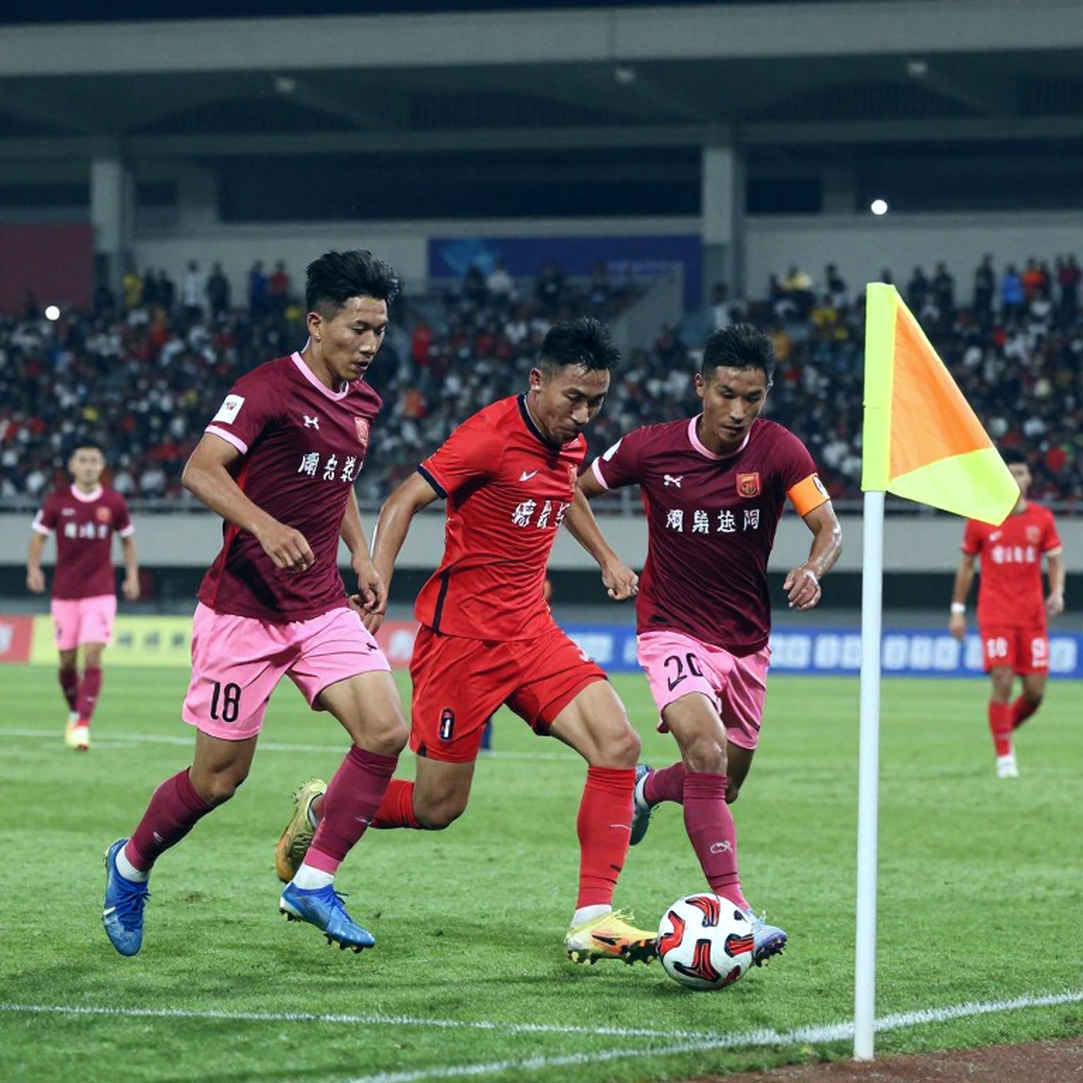
The target was Ruben Neves, the Portuguese midfielder who plays for Al-Hilal.
I sat for a long time with the short record of this incident. There was no passage of play to rewatch, no passing chart to dissect. There was a single line about the chants, a joint statement from two Saudi football governing bodies, a defensive club statement from Al-Taawoun, a formal complaint filed by Al-Hilal, and an empty space where the ruling should be.
That empty space is the story.
An ordinary fixture and an unordinary crack
Al-Hilal travelled to Al-Taawoun in the Saudi Pro League. Structurally, this is a meeting between one of the four clubs owned by the PIF sovereign wealth fund — Al-Hilal, Al-Nassr, Al-Ittihad and Al-Ahli — and a provincial club with a fraction of the budget, based in Buraidah.
Al-Hilal is the flagship of the Saudi football project. The club has signed Neymar, Kalidou Koulibaly, Sergej Milinkovic-Savic, Aleksandar Mitrovic and, of course, Ruben Neves. This is the club global media names when it discusses the ambition to turn the Saudi top flight into an international sports entertainment product.
Al-Taawoun sits on the other side of that picture: a mid-table club, occasionally reaching AFC Champions League places, never part of the global media investment group. The gap in revenue, squad value and social-media reach between the two is a gap between two different worlds inside the same league.
Neves joined Al-Hilal in June 2026 from Wolverhampton Wanderers for a reported fee in the region of 47 million pounds. In his mid-twenties he left the Premier League — one of the most competitive leagues on earth — for a competition in the middle of a full rebuild. That decision has been argued about endlessly, and I will not join that argument here, because it is not the point of this story.
The point is that Neves is the kind of asset around which an entire league project is constructed. A player like that, in the logic of any league trying to go global, has to be protected.
And it was on that exact point that the Al-Taawoun stands opened a crack.
Who spoke, and in what order
The sequence of reactions here deserves to be read slowly, because sequence reveals a great deal about how a federation operates under media pressure.
The Saudi Arabian Football Federation (SAFF) and the Saudi Pro League Association issued a joint statement. These two bodies do not normally stand side by side on every matter. Signing a single document together signals an unusual level of priority.
The statement leaned on football's values and sporting spirit. More tellingly, it described the conduct as exploiting personal tragedies to abuse or provoke. When a governing body labels the nature of a conduct before its Disciplinary and Ethics Committee has ruled, that is a signal about the framework that will be applied.
Al-Taawoun issued its own statement. The club did two things at once. It condemned the conduct. And it positioned that conduct as the act of a few individuals that cannot be attributed to Al-Taawoun's fans as a whole, while praising the wider fanbase.
This is a familiar defence template. I have read hundreds of such statements in European disciplinary files, and the structure is always the same: separate the act from the collective identity, keep goodwill with the majority, and create room for a committee to land a ruling without closing an entire stadium.
On the other side, Al-Hilal filed a formal complaint. The club did not merely defend its player in the media. It pushed the matter into the institutional channel. That is a demand for accountability, and it raises the likelihood of a visible sanction, because ignoring a formal complaint after a joint statement would create a credibility problem for the authorities themselves.
Finally, the Disciplinary and Ethics Committee opened its investigation. According to reporting aggregated by Goal.com and attributed to Asharq Al-Awsat, the process began on Sunday morning, and a ruling is expected within the coming days.
The speed here is faster than the standard for football disciplinary files, and speed usually correlates with a deterrent purpose rather than pure adjudication.
Two ways of naming the same act
This is the core point I want to dwell on longest, because it determines the entire outcome.
Al-Hilal calls it collective chanting. Al-Taawoun calls it the act of a few individuals.
These are not merely a matter of wording. In football disciplinary codes, classification determines the type of sanction available. If conduct is classified as collective, the framework tilts toward crowd measures — partial or full closure of a stand for one or more matches. If it is classified as isolated individual conduct, the framework tilts toward fines and warnings.
The difference in consequence is enormous. A fine is an accounting cost. A stand closure is something you can see with your own eyes, count in empty seats, and photograph for international media.
I once spent a full month rewatching the 48 group-stage matches of the 2026 World Cup, manually logging 1,247 refereeing decisions and cross-referencing them against open data and five Asian bookmakers. The lesson was not in the spreadsheet. The lesson was that the same event, defined two different ways, produces two entirely different outcomes. Naming is part of the game, not part of the description of the game.
In the Al-Taawoun case, both sides understand this. Al-Hilal needs the act called collective to make it a stadium matter. Al-Taawoun needs it called individual to make it a matter of a few people who represent nobody.
The Disciplinary and Ethics Committee will have to choose one framing, and that choice will become precedent.
Three sanction scenarios
Based on current regulations and comparable international precedent, three scenarios are plausible.
The first is the heaviest: a substantial fine plus partial or full closure of the Al-Taawoun stand for one or more matches. This is available if the committee accepts the collective framing and weighs the exploitation of personal tragedy as an aggravating factor. Lower probability, but not excludable.
The second is the central scenario: a fine plus a warning or limited partial closure, with Al-Taawoun's prompt public condemnation treated as mitigation. This is the most likely, because it lets the authorities demonstrate action without crushing a provincial club.
The third is the lightest: a fine only, with no crowd measure. This is available if the committee accepts the individual-acts framing. Low to medium probability, because the earlier joint statement has already created a public expectation of a visible sanction.
What matters is that in all three scenarios the direct financial cost is not large for Al-Hilal. Al-Hilal is not the party sanctioned. Al-Taawoun is — and for a club with a fraction of the budget, even a mid-range fine carries a different operational meaning.
This is the point I always stress in any writing about football discipline: sanctions differ between clubs not only in size but in the nature of their impact. The same nominal fine, applied to a sovereign-wealth-backed club and to a provincial club, produces two entirely different levels of pain.
International precedent and the frame Saudi Arabia is setting for itself
European football has a dense body of precedent on fan conduct. UEFA regulations spell out measures for discriminatory, abusive and provocative behaviour in stands: fines, partial closures, full closures, and in serious cases forfeits or expulsion.
These precedents do not automatically apply to Saudi football. But they create a reference standard that international media will use to judge the severity of the coming ruling.
When a league is trying to attract global audiences and international broadcast contracts, that reference standard becomes part of the product. Nobody buys broadcast rights to a league where abuse cases are handled in a way visibly different from the rest of the world.
A lenient ruling is not just a disciplinary decision. It is a message about how the league prices itself in the international media market.
And here is a detail that makes this case more interesting than usual. The body handling the case is also the body with a direct interest in protecting the image of the aggrieved club. Al-Hilal is one of the four PIF-acquired clubs. The Saudi Pro League Association oversees the competition whose commercial growth is tightly bound to the image of that group of clubs.
This creates what I call a perceived conflict of interest. There is no evidence of actual bias. But the structure is enough to raise a perception question, and in international media, perception travels faster than fact.
Contrarian angle one: the investment model creates the vulnerability
This is the part few commentaries will say plainly.
The Saudi Pro League has invested heavily in importing international stars. Cristiano Ronaldo to Al-Nassr. Karim Benzema to Al-Ittihad. Neymar to Al-Hilal. Ruben Neves to Al-Hilal. The list goes on. Each signing is an investment with an expected return through viewership, media engagement and league brand value.
But such a model creates a dependency that is under-counted on the balance sheet. When you import stars, you must guarantee a working environment of a matching standard. And the working environment includes the stands.
An international player deciding to move to Saudi Arabia does not weigh only salary. He weighs family, schooling, local culture, and how protected he will be at work. These are exactly the factors agents build into their risk assessments before a signature.
People call me a sceptic; I call myself someone who reads the books behind the pitch. And in those books there is a line that clubs expanding globally tend to skim: the cost of maintaining a safe environment for their most expensive assets.
A single incident like Al-Taawoun does not collapse a project. But it is a data point. And if similar data points repeat often enough, they become a variable in the next round of transfer negotiations.
That is why this is not only a disciplinary story. It is a test of whether a business model can protect itself.
Contrarian angle two: the verification gap
Here I have to say something those of us in this profession rarely say when covering a hot story.
The specifics of what was chanted rest largely on one original news source, Asharq Al-Awsat, aggregated by Goal.com. The formal process is well documented: the joint SAFF and Pro League Association statement, both clubs' statements, the opening of the committee investigation.
But the specific content of the conduct has not been independently verified across three sources, the standard I require in any investigation I take part in.
Three harmless data points stitched together can form a money map leading into a village with no football pitch. I learned that tracing sponsorship contracts around major sports events. The inverse is also true: a single source can produce a distorted map, and a distorted map is more harmful than a blank one.
I will not assert anything about the anatomy of the conduct beyond what the authorities themselves have confirmed in their joint statement. And that statement alone was enough to create a case.
This is a professional discipline I have applied since I was twenty-one, after an article of mine was pulled from a faculty blog forty-eight hours after publication. I kept the whole spreadsheet from that piece. I still have it. The lesson remains: conclusions follow evidence, never precede it.
What is actually being adjudicated here
In every disciplinary story, two layers run in parallel. The first is the specific conduct. The second is the standard the case will set.
The first layer is clear. There is conduct to address. Two governing bodies have spoken. A committee is investigating. A ruling is pending.
The second layer matters more in the long run. This case will become an anchor point. If the ruling tilts toward heavy sanction, other clubs learn that stadium conduct can cost them ticket revenue and home advantage across multiple matches. If it tilts light, the message sent is a different one.
Sports culture is at its most beautiful from the stands; at its most repellent from the accounting office. I wrote that years ago in a piece about the financial architecture of major sports events. It still holds here. What is being weighed in the committee room is not only justice for one player. It is the operating cost of a norm.
One player, one tragedy, and a line that is not on the spreadsheet
I want to close the analysis with what the original report mentioned but did not develop: the impact on Ruben Neves himself.
The joint statement references the exploitation of personal tragedies. That phrasing carries weight. It indicates the conduct went beyond ordinary mockery and touched a sensitive zone of a person's private life.
The psychological impact on a player in such a situation is a real variable, but it appears on no club balance sheet. And no index measures it.
This is the biggest blind spot of all data analysis in football. I can count passes, measure distance covered, calculate expected goals. I have no tool to measure the price of hearing hundreds of people sing about your grief during a night at work.
Al-Hilal filed a formal complaint. Institutionally, that is a positive signal. The club chose to stand with its player through a verifiable action, not just a social-media post. In a league importing stars from around the world, a club treating player protection as part of the employment relationship and pushing it into formal process is worth noting.
But a positive signal is not a ruling.
Blind spots and the limits of this analysis
I have to be honest about what I do not know.
I do not know the match result. I do not know the flow of play. I do not know at what minute the chanting occurred, in what context, after which passage of play. The source material does not provide it, and I will not invent it.
I do not know Al-Taawoun's disciplinary history. If the club had prior warnings about fan conduct, the framework could be harsher. If this is a first offence, it could be lighter. I have no data to determine that.
I do not know whether any political or institutional relationship factor is at play behind the scenes. And in football, assuming everything happens on the public stage is a naive assumption.
I do not know Ruben Neves's own reaction. He may have made statements I have not accessed. If so, they belong in the picture.
What I do know is that the process is running. That the ruling is coming. And that how that ruling is written will tell us a great deal about how Saudi football positions itself over the next decade.
What to watch after the ruling
There are four concrete signals I will track in the days and weeks ahead.
First, the type of sanction announced. A pure fine, or a fine plus a crowd measure. This is the clearest signal of which framing the committee accepted.
Second, the language of the announcement. If the official text uses collective wording, that confirms the heavier framework. If it describes the acts of a small number of individuals, that confirms the lighter one.
Third, whether there is any statement from the player or club about psychological support measures. Silence is also a signal. In this area European clubs are considerably further ahead, and that gap can be measured by comparing official statements.
Fourth, the frequency of similar incidents in the rest of the season. One incident is an event. Two is a pattern. Three is a systemic problem.
A forward-looking thought to close
There is something I have always found odd about this industry. We have extraordinarily sophisticated data systems to measure player performance. We have xG, PPDA, transfer valuation models, movement-tracking indices. But when it comes to measuring the quality of the environment in which players work, the data system is close to empty.
The Al-Taawoun case exposes another gap on the opposite side of the same problem. A league can spend hundreds of millions importing talent from around the world. But if the standards protecting that talent do not rise correspondingly, that investment will always stand on an uncertain foundation.
The coming ruling will be a measurement. Not of the severity of a sanction. But of whether a league going global understands that its most valuable asset is human, or still treats people as a line item to be optimised.
The answer arrives within days. If you read it, read the language closely.