
The Keighley Lesson: Community Table Tennis Grows When Clubs Invest in Coaches First
Trả lời chính: Keighley Table Tennis Centre (Anh) minh hoạ mô hình phát triển bóng bàn cộng đồng: 8 bàn tập được ngăn lưới, 10 học viên dự một phần khoá Level 1 và buổi CPD về kỹ năng giao bóng được lên kế hoạch. Điểm chính: - Trung tâm đặt tại tầng 2 một trung tâm thương mại ở Keighley, có khoảng 8 bàn bóng bàn và phòng học riêng. - Khóa Level 1/Coach Assistant với 10 học viên đã được tổ chức một phần tại đây. - Table Tennis England đang hỗ trợ qua Coach Developer Steve Brunskill. - Hội viên huấn luyện viên mới và gói Coach Plus sẽ áp dụng từ mùa giải 2026/27. Nguồn: Table Tennis England; bài giới thiệu câu lạc bộ (không ghi ngày xuất bản). Hỏi đáp liên quan: - Hỏi: Vì sao chọn chủ đề CPD về giao bóng? Đáp: Vì giao bóng và trả bóng là nhóm kỹ năng có ảnh hưởng trực tiếp nhất đến điểm số ở trình độ câu lạc bộ. - Hỏi: Mô hình này có thể áp dụng cho bóng bàn Việt Nam? Đáp: Có, nếu câu lạc bộ có phòng học cạnh sàn tập và kết nối với chương trình đào tạo huấn luyện viên của liên đoàn.
An upstairs room without a big sign
In Keighley, a small market town in West Yorkshire, few people look up at the second floor of old commercial buildings. Behind one of those ordinary facades, the Keighley Table Tennis Centre operates in a way that anyone working in grassroots sport development should study closely. It has roughly eight tables in a row, each enclosed by its own barrier and surround netting. Next to it sits a separate classroom, a small kitchen and a refreshment area. There is no grandstand, no large sign, no glossy decoration.
A careful observer notices that this is not just a recreational table tennis club. A level one coaching assistant course was recently delivered in part at the centre, with ten learners from a range of backgrounds. Ten people is a small number. But for a community table tennis system, it points to the real bottleneck: not tables, not balls, but coaches who know how to teach.

I do not trust elegant introductions. I trust the operational structure behind a facility. And the operational structure of Keighley reveals itself in how the space is organized.
Eight tables like eight small laboratories
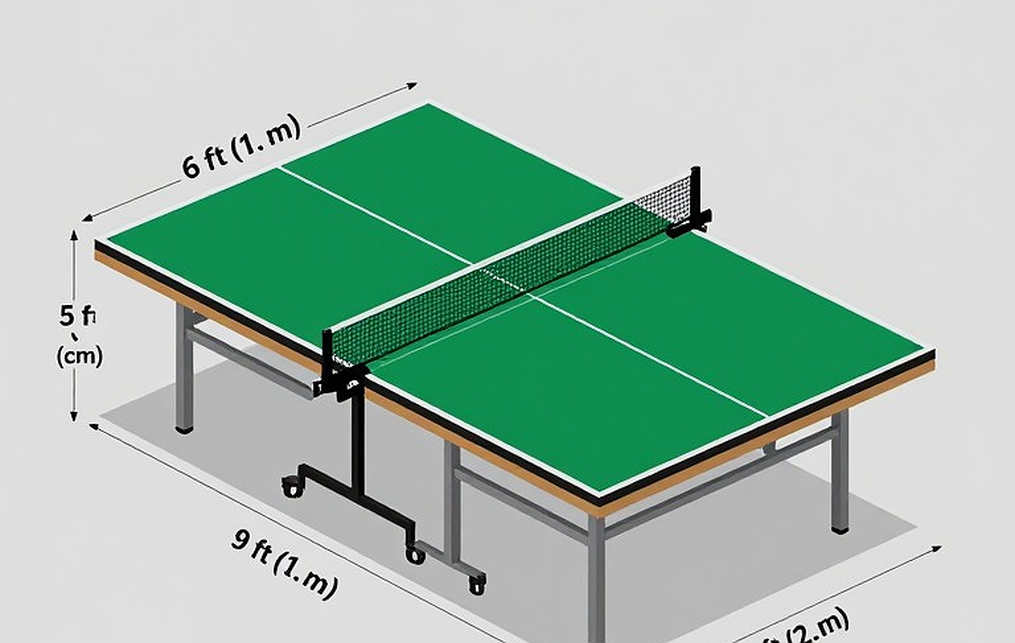
At first glance, surrounding each table stops balls from rolling into a neighbouring game. For coaching, the detail matters more. When each table becomes an isolated teaching zone, a club can divide ten learners into several groups, each working on different drills without disrupting the others. A serve practice can happen at tables one and three, while footwork correction happens at tables five and seven. The arrangement transforms an ordinary table tennis hall into a structured training classroom.
The classroom next to the playing area is another strong signal. Coaching education includes many theoretical blocks: teaching principles, session design, how to observe and correct. If theory is taught far away from practice, learners waste time, momentum, and the crucial link between concept and adaptation. The classroom made it easier for the centre to host part of the Level 1 course smoothly.
From a development perspective, there is a simple cost logic: a club that can host both theory and practice in one building reduces a major barrier to running coaching qualifications. That is why this kind of venue can become a regular destination for training, not just an occasional venue for a single course.
What does a serving CPD session reveal?
A planned CPD session dedicated to the serve is an underrated detail. In club-level table tennis, serve and receive are the highest-leverage skills in the game. A good serve creates points immediately; a weak receive hands the initiative away by the third ball. The fact that a community venue is planning a serving workshop shows a desire to improve the real quality of players, not just to organise events.
The session also shows how Table Tennis England places coaches at the centre of its grassroots strategy. Steve Brunskill, a Coach Developer for the governing body, visited Keighley and supported the club in shaping its development priorities. In structural terms, this is more important than sponsorship: it is a national system investing in the bottom of the pyramid.
The other strong institutional signal is the new coaching membership for the 2026/27 season, together with the Coach Plus tier that gives coaches extra support from the Coach Development team. On the surface, it is just another membership. In reality, it is a retention tool: a way to turn one-time volunteer coaches into longer-term community assets.
The contrarian angle: do not rush to build concrete
The Keighley story matters because it challenges a common belief: to grow the sport, build bigger halls and shinier academies. Many countries already have impressive venues with no one to activate them. The sustainable formula is different: a decent facility, a trained coaching workforce, and a qualification pathway that keeps feeding both.
This becomes clearer when we look closely at Keighley's human structure. Andy Bray oversees the centre's development, but he works abroad for long periods. He can still lead from a distance, but any system that depends on one person is at risk. The real answer is the new group of coaches he wants to develop, because they will be on the ground every day. Danny's priority is a governance decision, not a facility decision.
Without this insight, the story of Keighley can easily be read as another 'hidden gem' profile. But the biggest risk for community sports is not opening day; it is year three, when a founder's energy fades, volunteers drift away, and no second generation has arrived. The only defence is to build the coaching group first and treat people as part of the infrastructure.
A question for Vietnamese table tennis
Vietnamese readers should not copy the Keighley model directly. Vietnam has its own traditions, funding challenges and playing culture. But the core question is similar: when a table tennis club in Ho Chi Minh City, Hanoi or Da Nang wants to grow, what does it think about first? More tables, better lighting, or the people who can coach the next generation?
Many Vietnamese clubs have large member bases, high-level players and an active local scene. But the number of coaches trained through formal national certification programs remains limited. Without a development system for coaches, any movement will depend on a few devoted individuals and will slow down when those individuals move on.
The lesson of a small English centre is simple: facilities have value only when good people operate them. Keighley has no huge budget, but it has a coordinator who sees the need to build a coaching group, and a national organisation ready to help. That combination does not require enormous funding as much as it requires vision and a concrete programme.
The roadmap, not the ribbon-cutting
Invest in a coaching pathway before investing in an opening ceremony. Count how many coaches become certified each year, how many CPD sessions are held, how many people stay after their first course. Those numbers report the health of a system better than any photo of a new training hall.
Keighley only has eight table tennis tables above a small commercial centre. But it is doing something bigger than its appearance suggests: training the people who will teach the next generation. Vietnamese table tennis may not need another expensive facility. It needs more people like Andy Bray who ask the right question — and a certification system that turns their answer into reality.